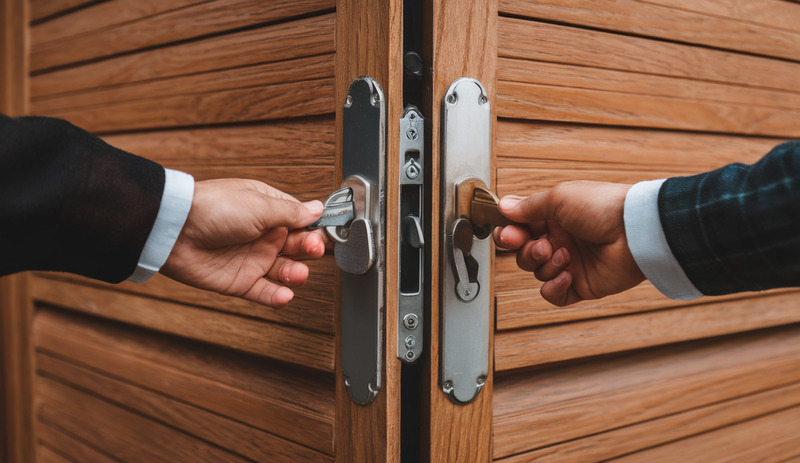
You’ve just arrived home, key in hand, and something feels wrong. The lock clicks, but the door won’t open. You jiggle the key, twist it harder, but nothing happens. Frustration starts to build, and you’re wondering if you’ll be stuck outside all night.
Don’t worry. This guide will walk you through exactly what’s happening with your stubborn lock and how to solve the problem quickly and safely.
Why Your Lock Clicks but Won’t Open
Sometimes the lock makes that satisfying click and still stays shut. It feels like a tiny mystery that most homeowners deal with almost every week.
The sound can trick you into thinking everything inside the lock is fine, when actually something else is stopping the bolt. Residents in McKinney, TX often encounter these frustrating lock issues.
Key or Mechanism Worn Out
A key that’s been copied a dozen times, or used every day, can lose the exact shape of its teeth. Think of an old sneaker whose sole is smooth – it just slides instead of gripping.
Inside the lock the tiny pins can get rusty or gummy, especially if the house is damp. When the pins do line up enough to give a click, they may still be too weak to push the bolt free.
The lock registers the click, but the bolt stays stuck. A slight bend can still line up the pins enough for a click, yet prevent the cylinder from turning all the way.
Suggested for you: Why Is My Deadbolt Hard to Turn?
Door or Lock Out of Alignment
Homes move. Foundations settle, frames warp, doors sag a little over years. Even a millimeter shift can keep the latch from moving smooth.
Imagine trying to slide a puzzle piece that’s been warped – it looks right but it just won’t fit. When the door frame is off, the bolt may hit the jamb early, stopping it from retracting even though the pins have clicked.
People often blame the lock itself, ignoring that the door may simply be out of square. For reliable lock solutions, homeowners can trust Local Runners Locksmith to diagnose and fix these issues.
Temperature Effects on Metal
Heat and cold make metal grow and shrink. In a Texas summer the lock’s steel expands; in a winter freeze it contracts.
Those tiny changes can tighten the clearances inside, making the pins stick or the bolt seize. The lock still hears the key, gives the click, but the metal has tightened just enough to hold it in place.
- Hot days: cylinder and bolt swell, tightening the fit.
- Cold nights: everything shrinks, raising friction.
- Fast swings: sudden hot‑to‑cold changes magnify the problem.
When to Call a Locksmith
If you’ve tried wiggling the key, turning it at a different angle, or looking to see if the door’s alignment is off and nothing changes after a few minutes, it’s time to stop.
Forcing the lock can snap the key, bend the pins or even break the housing – cheaper to fix than replace the whole lock later. A trained locksmith has tools to pull a broken key out cleanly, re‑key the whole lock, or swap the mechanism while keeping the door solid.
Pro tip: don’t grab pliers or a hammer to yank the lock open. The chance you’ll make a bigger problem is way higher than any quick fix you think you’re doing.
In Conclusion
Most “click‑but‑won’t‑open” locks come from three places: a key or internal parts wearing out, the door frame shifting out of alignment, and metal moving with temperature changes.
A bit of patience and the quick checks above can solve many of them. Yet knowing when you’ve hit the limit of a DIY fix means you’ll call a qualified locksmith before a small glitch turns into a costly repair.
This saves both the door and your wallet from bigger trouble down the line.
Lock problems are frustrating, but they’re usually fixable. Whether you need a quick repair or a full lock replacement, professional help is just a phone call away.
Need immediate help in McKinney? Local Runners Locksmith is ready to get you back inside safely and quickly.